hupicake
-
Tools Fuyu: a dynamic island for Windows and macOS with messages, clipboard and AI agent status
Fuyu is a floating island for Windows and macOS that gathers messages, tasks, clipboard history, translation, music and AI agent status at the top of the screen.
-
Tools motlab: video as code with canvas scenes, a review viewer and agent skills
motlab is a video engine that turns canvas scene pages written as code into MP4 video, with a web viewer for frame-by-frame review and agent skills that build scenes from references.
-
Built with Claude turbo-browser-mcp: a Playwright MCP server that fills forms and batches browser steps in one call
turbo-browser-mcp is a Playwright MCP server for browser automation that fills a whole form in one call, returns only changed page elements, and blocks final submit buttons by default.
-
Built with Claude yami: a pixel-art desktop shell for niri, with its own files, viewer and player
yami is a pixel-art desktop for the niri Wayland compositor, built in Rust as a light shell with separate modules for files, viewing, playing, screenshots and login.
-
Tools inference-optimisation: hill-climb a local LLM server for faster decode and prefill
inference-optimisation is an agent skill that hill-climbs the speed of a local LLM server on any hardware and any quantization, starting from a theoretical ceiling and testing one change at a time.
-
Research Tencent Hy4 flash: price, coding benchmarks and how it compares to Claude Haiku 5.5
Tencent's open-weight Hy4 flash costs $0.070 input and $0.281 output per million tokens, and OpenRouter currently charges half that. Tencent's own tests put it close to Claude Haiku 5.5 on office tasks but far behind DeepSeek V4.1 Flash on terminal coding.
-
Tools Google Antigravity Orchestrator explained: how it works, who gets it and when to use it
Google Antigravity's Orchestrator pairs a Gemini 4 Carbon or Argon planner with Gemini 4 Hydrogen as the executor and hands control back to the planner when Hydrogen hits friction. Here is how it works, which plan gets it and when to use it.
-
Research GPT-6.2 benchmarks vs Claude Fable 5.2: what independent evaluators found
Independent tests of GPT-6.2 Astra and Sol from Artificial Analysis, Vals AI and Epoch AI: Claude Fable 5.2 leads the broad indexes, while GPT-6.2 costs a fraction per task.
-
Tools antialgorithm: a Claude Code skill that moves creative work past the first average pick
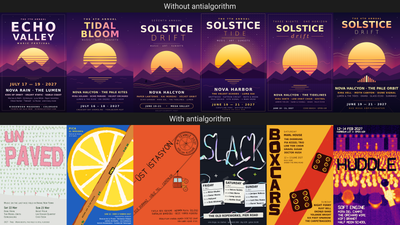
antialgorithm is a Claude Code skill that pushes creative work past the first, most average pick. It names the default, then ties the replacement choice to the reader's own project.
-
Built with Claude Digital Human Koubo: AI talking-head videos from one photo with an agent skill
Digital Human Koubo is an Agent Skill that turns one photo and a short brief into a finished talking-head video with a digital human presenter, using Renoise MCP generation and Remotion editing.
-
Research Gemini 4 Hydrogen vs Claude Sonnet 5.5 for coding: price, speed and benchmarks
Gemini 4 Hydrogen costs $1.50/$7.50 per million tokens against $2/$10 for Claude Sonnet 5.5. Google's own table has each model winning different coding tests, and an independent index puts them one point apart. Here are the published numbers, with sources and dates.
-
Research Gemini 4 Carbon vs Claude Opus 5.5 and Fable 5.2: benchmarks and pricing compared
Gemini 4 Carbon costs half of Claude Opus 5.5's per-token price until November 30, then exactly the same. Google's Carbon table and Anthropic's Fable 5.2 table each include the other's models, and they disagree on several rows. Here are the published numbers, with sources and dates.
-
Tips How to call Gemini 4 Hydrogen from Claude Code: gemini-api CLI, Docs MCP and skills
Google's docs describe ways to use Gemini from a coding agent such as Claude Code: the gemini-api CLI to call Gemini 4 Hydrogen from the shell, a Gemini Docs MCP server and installable skills. Here are the documented commands, what each is for, and what it costs.
-
Tools External sandboxes for coding agents: run Claude Code, Codex and Pi commands in a Linux guest with npx or uvx
Prime Radiant and Simon Willison released three sandbox servers, external-sandbox-v86, -container and -quicksand, that run a coding agent's commands inside a Linux guest that sees only the folders and hosts you allow. Here is how each agent connects and what stays outside.
-
Tips Claude Code 2.1.327: claude mcp add-json can read from stdin, so MCP tokens stay off the command line
Claude Code v2.1.327 adds claude mcp add-json <name> -, which reads the server's JSON from stdin so a token never sits in your shell command. The same release fixes project-scope claude mcp add and remove deleting other keys from .mcp.json.
-
Tools Arcane: a self-hosted web dashboard for managing Docker containers and Compose projects
Arcane is a self-hosted web interface for managing Docker containers, Compose projects, images, volumes and networks from one dashboard, with remote agents for other hosts.
-
Daily MAI Code 2 lands in GitHub Copilot, and GPT-6.2 Astra and Sol reach the API
Microsoft's MAI Code 2 models are in Copilot at promotional prices until May 2027, and OpenAI's GPT-6.2 Astra and Sol arrive with lower Astra token prices and a new rule about editing conversation history.
-
News MAI Code 2 in GitHub Copilot: plans, per-token prices, and what the benchmark math assumes
Microsoft's MAI Code 2 and MAI Code 2 Flash are now in the GitHub Copilot model picker. Here is which plans get them, what they cost per million tokens during and after the promo, and the fine print behind the '96% of Opus 5.5 at 5% of the cost' claim.
-
News GPT-6.2 Astra and Sol in the API: prices, the Ultrafast change in March, and what to fix before you switch
OpenAI's gpt-6.2-astra costs $8 input and $40 output per million tokens, 20% less than GPT-6 Astra; gpt-6.2-sol keeps $2/$10. Here are the full rate tiers, the Ultrafast price that doubles on March 1, 2027, and the API changes OpenAI asks you to make first.
-
Tips How the Claude Code team verifies agent work: a verify skill, REVIEW.md on a protected branch, and a commit gate
Claude writes and reviews about 90% of the Claude Code team's code. A new post explains how they check it: a verify skill that runs the app before each commit, review rules read from the protected default branch, and a commit gate that starts in observe mode.